
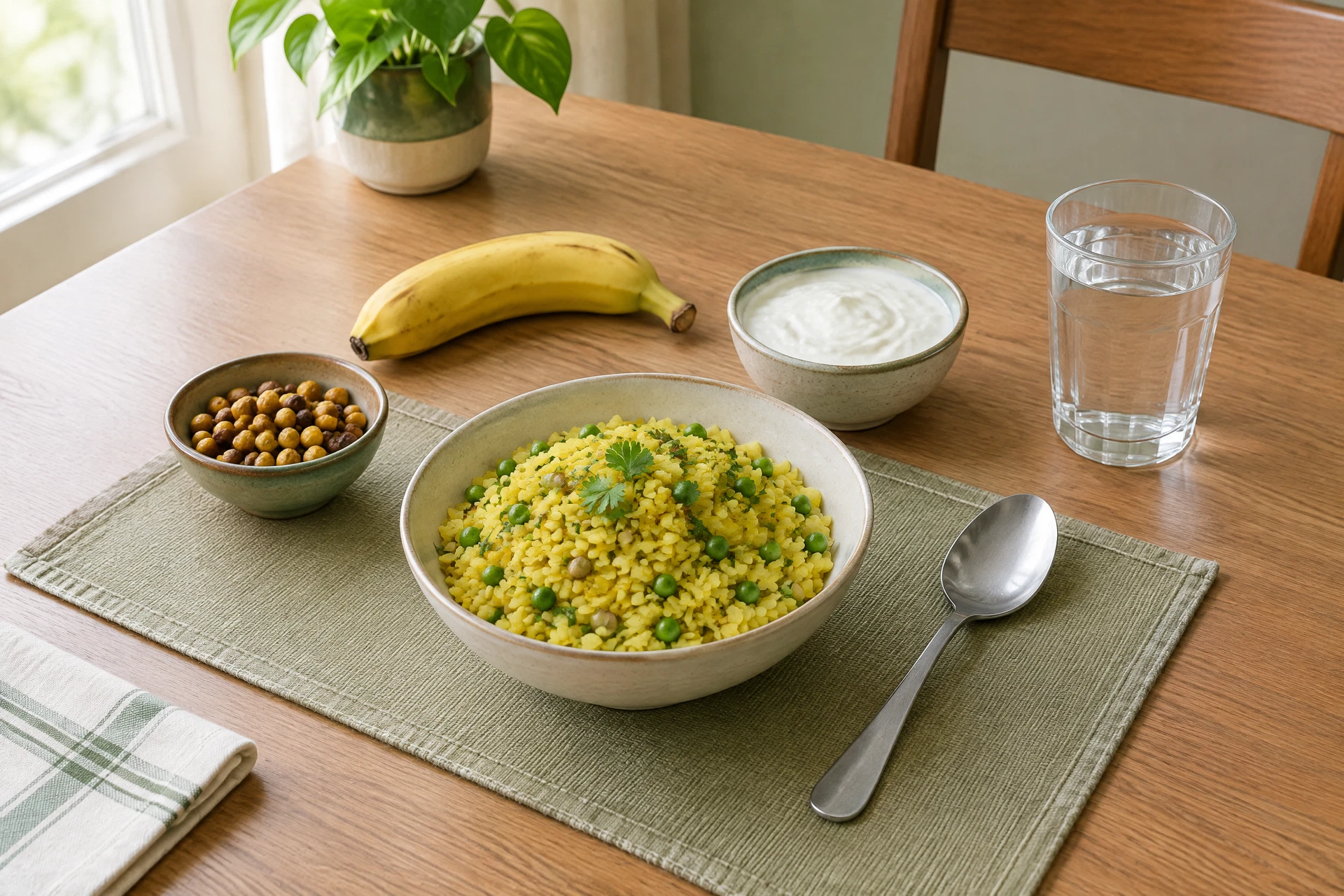
A pre-workout meal does not need a supplement label. Start with familiar food, enough fluid, and a portion that leaves you comfortable when the session begins.
Quick answer: match the meal to the time available
When several hours are available, a normal balanced meal can provide carbohydrate, protein, and fluid. Closer to training, many people prefer a smaller, simpler option with less fat, fibre, and spice because these can slow digestion or aggravate symptoms for some people. This is a tolerance rule, not a list of forbidden foods. The wider day still matters more than one perfectly timed plate.[1] [2]
| Time before training | Practical starting idea | Why it may fit |
|---|---|---|
| 2–4 hours | Rice or roti with dal, cooked vegetables, curd, and water | A familiar mixed meal with time to digest |
| 1–2 hours | Poha with peas plus curd; idli with sambar; or a small paneer sandwich | Smaller meal with carbohydrate and some protein |
| 30–60 minutes | Banana; toast; a small portion of dates; or diluted lassi if tolerated | Simple, portable energy when appetite and time are limited |
| Very early session | Water first, then a small familiar snack—or train before breakfast only if it feels and performs well for you | There is no single rule for every short morning session |
Carbohydrate is useful fuel, not a moral category
For moderate or hard sessions, carbohydrate-rich foods can help make fuel available for working muscle. Rice, roti, poha, upma, idli, fruit, potatoes, and bread can all fit; the useful choice depends on the rest of the diet and the session. Endurance athletes with long or repeated training have different carbohydrate needs from someone taking a short walk or completing an easy strength session.[2]
Protein can be modest before training
Protein before or after resistance exercise can support muscle protein synthesis, but the response is not confined to a tiny countdown window. Daily protein intake, food quality, training, and the rest of the day remain important.[3] Practical Indian options include curd, milk, paneer, eggs, soy, dal, beans, fish, or chicken according to preference and tolerance. More is not automatically better, and a large protein-heavy meal immediately before exercise may simply feel uncomfortable.
What to adjust for heat and digestion
Mumbai heat, long commutes, and humid training spaces can change fluid needs. Begin hydrated, carry water when access is uncertain, and avoid experimenting with a large new meal before an important session. Reflux, irritable bowel symptoms, diabetes, pregnancy, and medicines that affect blood glucose or digestion can change what is appropriate.
| Problem | Possible adjustment |
|---|---|
| Heaviness or nausea | Reduce the portion or move the meal earlier |
| Hunger midway through training | Add a little more carbohydrate or choose a more substantial earlier meal |
| Reflux | Reduce trigger foods, fat, and meal size; leave more time before training |
| Low energy in long sessions | Review total food intake and session-specific carbohydrate rather than relying on stimulants |
A food-first planning checklist
Choose food you already tolerate. Match the portion to time and training demand. Include fluid. Notice comfort, energy, and performance across several sessions. Change one variable at a time. A pre-workout meal should make the routine easier to repeat, not create anxiety about an exact clock time.
The best pre-workout meal is usually familiar, proportionate to the session, and comfortable enough that you can train.
This page provides general education, not a meal prescription. Seek individualized advice for a medical condition, pregnancy, growth, an eating-disorder history, recurrent exercise-related symptoms, or competitive sport with demanding fuelling requirements.
Continue with the Nutrition archive or browse all Fiteforms articles.
Sources and further reading
1. ICMR-National Institute of Nutrition, Dietary Guidelines for Indians 2024 — Official Indian food-based guidance. It emphasizes dietary variety, vegetables, legumes, minimally processed staples, appropriate food combinations, physical activity, and individual context.
2. Kerksick et al., ISSN exercise and sports nutrition review update — 2018 narrative review of sports-nutrition evidence and recommendations. Meal needs vary with training duration, intensity, tolerance, and total diet.
3. Jäger et al., International Society of Sports Nutrition Position Stand: protein and exercise — 2017 position stand for healthy exercising people. Sports-nutrition ranges do not replace clinical nutrition advice and are not automatically appropriate for every reader.