
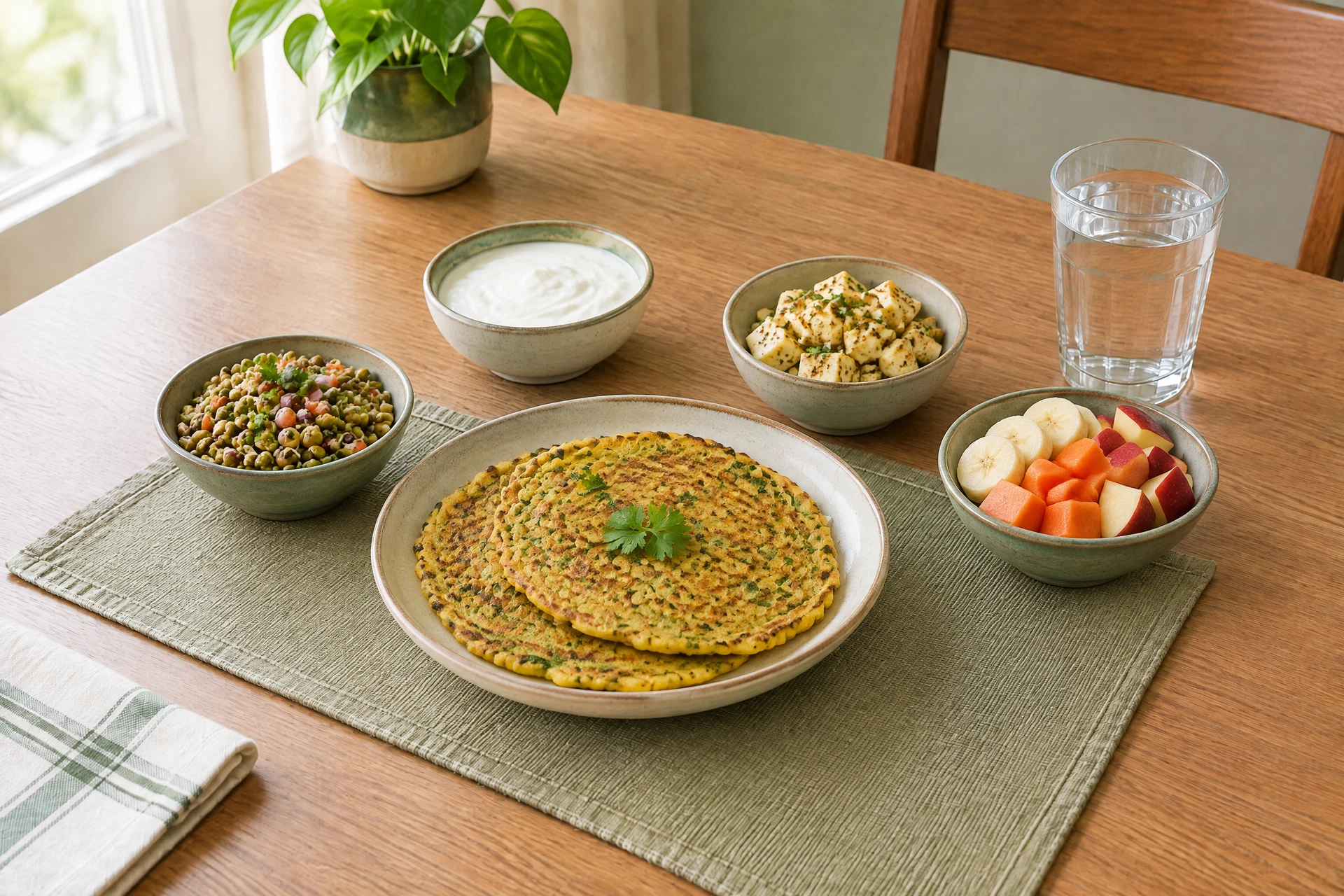
A high-protein breakfast can still look like breakfast. Use ordinary Indian foods, keep the meal balanced, and choose a protein amount that fits the whole day rather than chasing the largest number.
Quick answer: give the meal a clear protein anchor
Start with one meaningful protein food—such as dal, beans, curd, milk, paneer, eggs, soy, fish, or chicken—then add vegetables or fruit and a suitable cereal, millet, or other carbohydrate. ICMR-NIN emphasizes variety across food groups and appropriate combinations, including cereals with pulses or beans, rather than treating one nutrient as the entire diet.[1]
| Breakfast | Protein anchors | Balance it with |
|---|---|---|
| Moong dal chilla | Ground moong plus curd or paneer filling | Vegetables, chutney with modest salt, and fruit |
| Besan vegetable cheela | Besan plus curd | Tomato, onion, greens, and a whole fruit |
| Idli and sambar | Urad dal in idli plus lentils in sambar | Extra vegetables and curd if wanted |
| Paneer bhurji with roti | Paneer | Vegetables and an appropriately sized roti |
| Egg bhurji with roti | Eggs | Vegetables, fruit, and water |
| Soy or tofu scramble | Soy or tofu | Vegetables and poha, toast, or roti |
| Curd bowl | Thick plain curd or hung curd | Fruit, oats, nuts, and seeds in portions that suit energy needs |
| Leftover dal breakfast | Dal or rajma | Rice or roti, vegetables, and curd |
High protein does not mean carbohydrate-free
Carbohydrate foods can support training and daily energy needs. Removing them is not required to make breakfast protein-rich. A balanced meal can include cereal or millet, pulses, vegetables, fruit, nuts or seeds, and dairy or another protein food according to preference. The portions depend on appetite, activity, body size, health, and what the rest of the day contains.[1]
Think across the day, not only at breakfast
For healthy exercising adults, sports-nutrition guidance often discusses higher protein ranges than general adult reference intakes, but individual needs vary and these ranges are not clinical prescriptions.[2] Breakfast can make the daily total easier to reach, yet doubling a serving does not compensate for low dietary variety or an unsuitable training plan.
Vegetarian and vegan planning
Pulses, beans, soy foods, nuts, seeds, and cereal–pulse combinations can all contribute. Variety helps cover amino acids and micronutrients. Vegan diets also require deliberate vitamin B12 planning, and some people may need qualified guidance for iron, calcium, iodine, or other nutrients. A food being labelled high protein does not prove that the overall meal is balanced.
What about protein powder?
Powder may be convenient, but it is not necessary for everyone. ICMR-NIN’s food-based guidance advises obtaining protein through appropriate food combinations and cautions against using protein supplements simply to build muscle.[1] Product quality, contamination, dose, cost, and medical conditions also matter. If a supplement is considered, use qualified advice and a product-testing standard relevant to the setting.
| Constraint | Food-first option |
|---|---|
| Little morning time | Curd with oats and fruit; boiled eggs with toast; leftover dal with roti |
| No refrigeration at work | Roasted chana, peanut chutney, besan chilla, or shelf-stable soy milk where appropriate |
| Low appetite | Use a smaller meal and distribute protein across later meals |
| Budget pressure | Prioritize pulses, soy, milk or curd where tolerated, eggs where used, and seasonal foods |
Protein is one part of breakfast. A useful meal also respects appetite, affordability, culture, and the rest of the day.
This page is for general education. Kidney disease, pregnancy, childhood or adolescence, food allergy, digestive disease, diabetes, and an eating-disorder history can change appropriate food choices and protein intake.
Continue with the Nutrition archive or browse all Fiteforms articles.
Sources and further reading
1. ICMR-National Institute of Nutrition, Dietary Guidelines for Indians 2024 — Official Indian food-based guidance. It emphasizes dietary variety, vegetables, legumes, minimally processed staples, appropriate food combinations, physical activity, and individual context.
2. Jäger et al., International Society of Sports Nutrition Position Stand: protein and exercise — 2017 position stand for healthy exercising people. Sports-nutrition ranges do not replace clinical nutrition advice and are not automatically appropriate for every reader.