
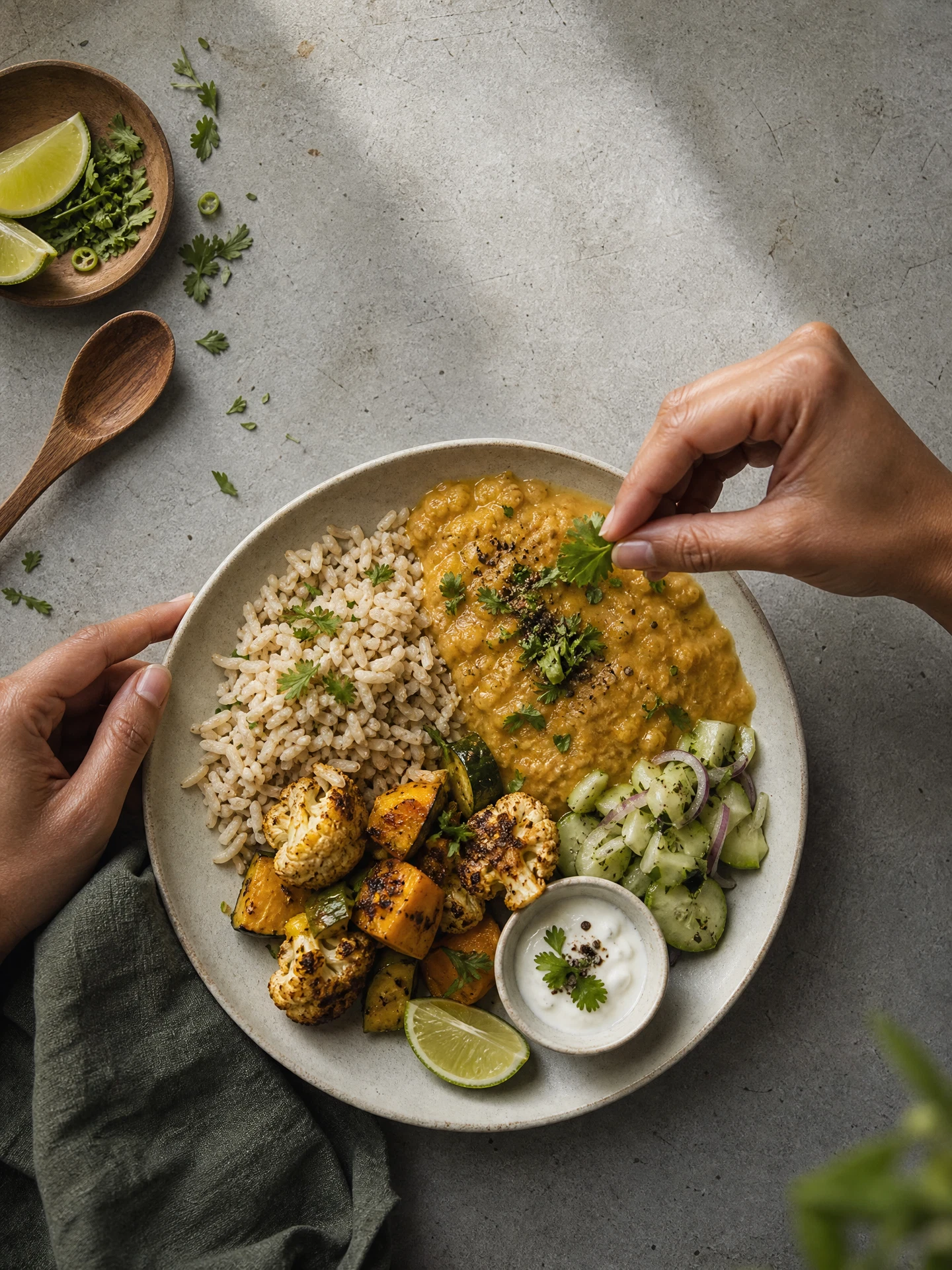
Healthy eating is a pattern built across meals and weeks. It can include dal and rice, roti and sabzi, idli and sambar, fish curry, paneer, fruit, packaged convenience foods, and celebration—without turning every choice into a moral judgment.
Build variety before perfection
WHO emphasizes vegetables, fruit, pulses, whole grains, nuts, seeds, and appropriate protein foods while limiting excess free sugar, sodium, saturated fat, and trans fat.[1] Variety helps cover nutritional needs and makes a pattern easier to sustain.
Use a flexible plate
A practical meal can combine vegetables or fruit, a protein source, a grain or other carbohydrate, and an appropriate fat.[2] The portions are adjusted to appetite, activity, goals, and health needs. Mixed dishes can be evaluated by their ingredients rather than forced into separate compartments.
Choose Indian staples strategically
| If a meal is mostly… | Consider adding… |
|---|---|
| Rice or roti | Dal, curd, egg, fish, chicken, soy, paneer, or beans plus vegetables |
| A snack | Fruit, nuts, roasted chana, curd, or a more filling meal when needed |
| A mixed dish | Extra vegetables, salad, fruit, or a protein side depending on what is missing |
| Packaged food | Read serving size, sodium, added sugar, protein, fibre, and ingredients together |
Processing is not a complete verdict
Some processing improves safety, shelf life, affordability, and convenience. Compare the whole product and its role in the diet. India’s dietary guidelines emphasize food safety, variety, appropriate portions, and limiting foods high in fat, sugar, or salt.[3]
Personal needs come first
Pregnancy, childhood, diabetes, kidney disease, allergies, gastrointestinal conditions, and eating-disorder recovery can require individualized nutrition care. Use this guide for general education, not to replace a prescribed medical diet.
Continue with the Nutrition archive or browse all Fiteforms articles.
Sources and further reading
1. World Health Organization, Healthy diet — Global healthy-diet principles.
2. Harvard T.H. Chan School of Public Health, Healthy Eating Plate — Flexible visual meal framework.
3. ICMR–National Institute of Nutrition, Dietary Guidelines for Indians 2024 — India-specific dietary guidance.