
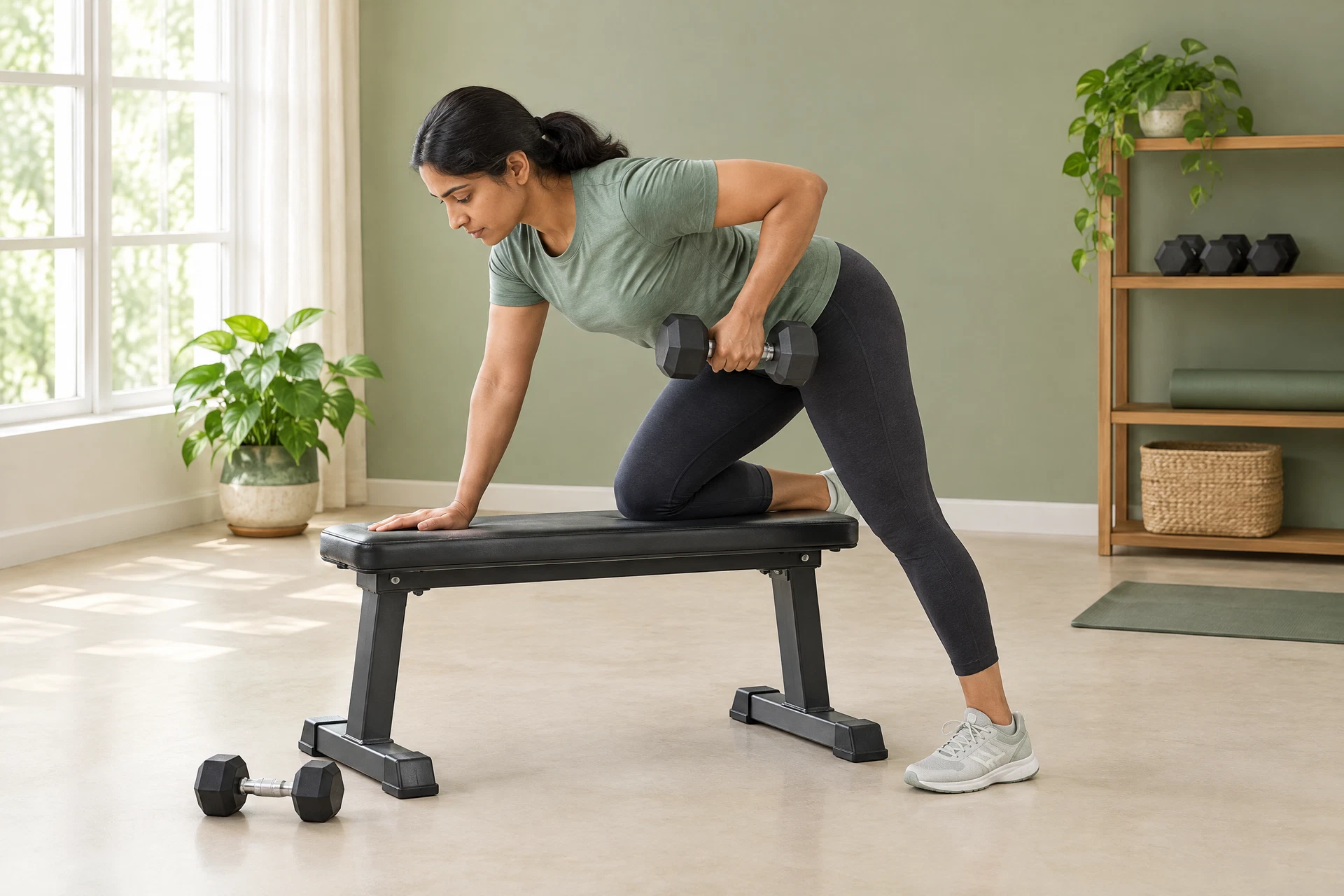
Strength training can improve strength and physical function and help protect lean mass during weight loss. It is valuable even when it does not create the fastest change on the scale.
What strength training contributes
Resistance training challenges muscles with body weight, bands, machines, or free weights. The 2026 ACSM evidence overview found improvements in strength, muscle size, power, endurance, and several physical-function outcomes compared with no resistance training.[1] These benefits are meaningful beyond body weight.
The body-composition evidence
A 2021 overview of reviews in adults with overweight or obesity found that exercise programmes had favourable but variable effects on weight and body composition. Resistance training reduced lean-mass loss during weight loss in one included systematic review. Aerobic training tended to produce greater weight and fat changes than resistance training alone in the comparisons available, while combined training can serve both goals.[2]
Why the scale can hide useful change
Body weight combines fat mass, lean tissue, water, glycogen, food, and other components. A person may become stronger or preserve lean tissue while scale change is modest. Home body-fat scales also have measurement error. Track training consistency, strength, function, waist or clothing fit if appropriate, health markers under clinical care, and how the plan affects wellbeing.
| Day A | Day B |
|---|---|
| Sit-to-stand or squat variation | Step-up or split-squat variation |
| Elevated push-up or press | Overhead or angled press if comfortable |
| Hip hinge variation | Bridge or another hip-dominant movement |
| Band or dumbbell row | Pulldown or alternate row |
| Carry or trunk exercise | Carry or trunk exercise |
Begin with a small number of controlled sets and leave repetitions in reserve while learning. When the same work feels stable and recovery is good, add a little load, a repetition, a set, or range. The ACSM review found no consistent advantage from training to momentary muscle fatigue for the main outcomes.[1]
You cannot spot-reduce body fat
Abdominal exercises can strengthen trunk muscles, but they do not selectively remove fat from the abdomen. Where fat is lost reflects total energy balance and individual biology. Programme claims that promise one exercise will melt fat from one area should be treated cautiously.
Food, recovery, and medical context still matter
Strength training cannot compensate for an eating pattern that is unsustainable or nutritionally inadequate. Very aggressive energy restriction can affect training quality, recovery, mood, and lean tissue. Sleep, medication, menopause, disability, pain, food access, and health conditions can all change the plan.
| Check | Useful question |
|---|---|
| Strength | Can I perform the same movement with more control or a modest progression? |
| Recovery | Am I ready for the next planned session? |
| Routine | Does this fit the week without repeated all-or-nothing resets? |
| Health | Are symptoms, labs, and medication needs being reviewed by the right clinician? |
Strength training is not valuable only when it makes the scale fall. Function and preserved lean mass matter.
General education only. Seek individualized care for unexplained weight loss, eating-disorder symptoms, pregnancy, recent surgery, persistent pain, or a condition affected by resistance exercise.
Continue with the Weight Loss archive or browse all Fiteforms articles.
Sources and further reading
1. Currier et al., ACSM Position Stand: Resistance Training Prescription for Healthy Adults — 2026 overview of 137 systematic reviews involving more than 30,000 participants. Most underlying evidence concerns healthy adults and many studies include novice trainees.
2. Bellicha et al., Effect of exercise training on weight loss and body composition — 2021 overview of 12 systematic reviews and 149 studies in adults with overweight or obesity. Effects varied and weight maintenance evidence was limited.
3. World Health Organization, Guidelines on physical activity and sedentary behaviour — 2020 global public-health guidance covering aerobic activity, muscle strengthening, sedentary behaviour, and population-specific considerations.