
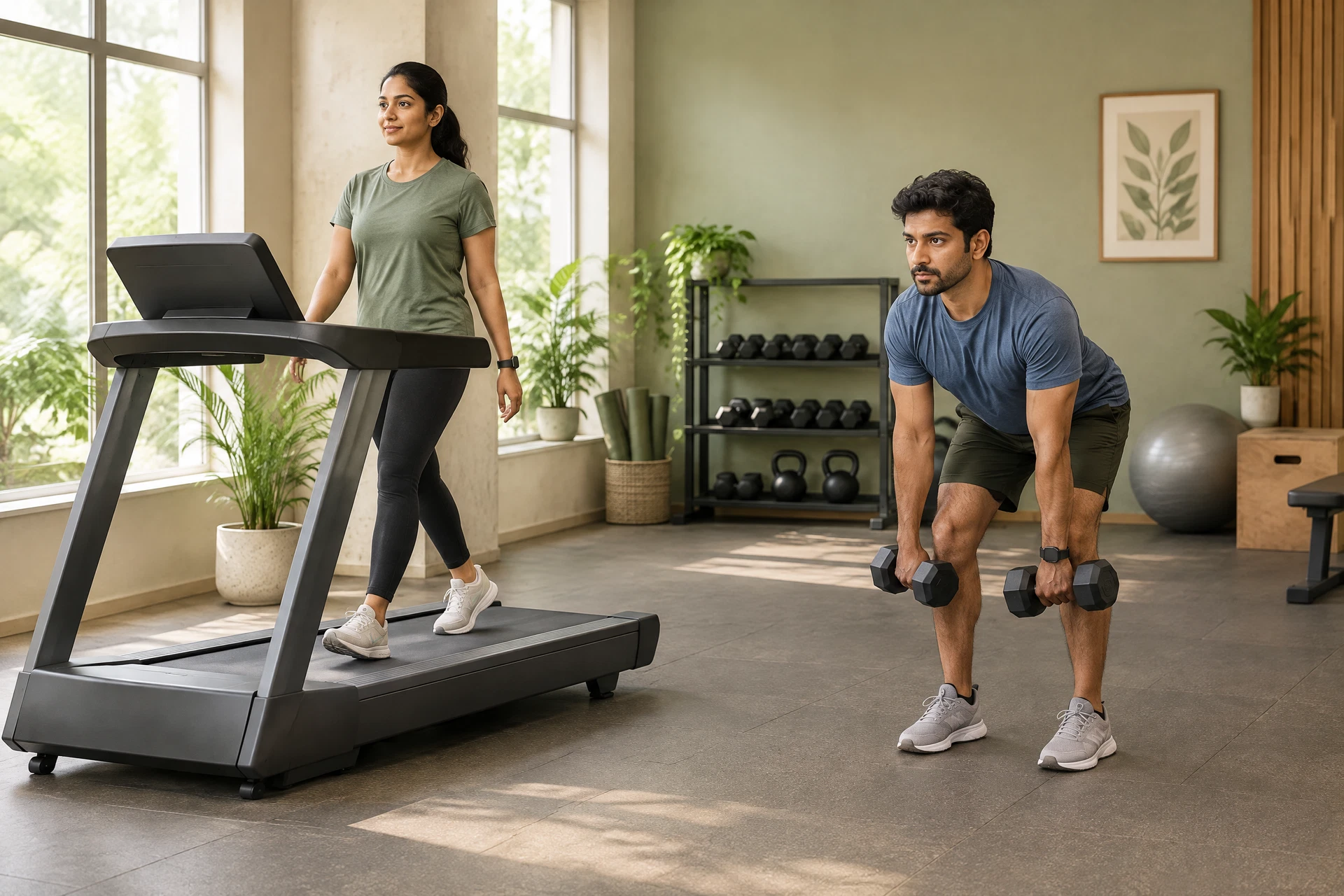
Cardio and strength training create overlapping but different adaptations. Most people do not need to choose a permanent winner; they need a weekly mix that reflects goals, access, preference, and recovery.
Quick comparison
| Question | Cardio | Strength training |
|---|---|---|
| Primary training demand | Sustained or repeated rhythmic activity | Muscle force against resistance |
| Common adaptations | Aerobic capacity and endurance | Strength, muscle size, power, and physical function |
| Examples | Walking, cycling, running, swimming | Body-weight, bands, machines, dumbbells, barbells |
| Progression | Duration, frequency, pace, incline, or intervals | Load, repetitions, sets, range, or exercise variation |
| Public-health role | Weekly aerobic activity | Muscle-strengthening on multiple days |
What public-health guidance recommends
WHO guidance includes both aerobic activity and muscle-strengthening activity. It also emphasizes that some activity is better than none and that people should start with manageable amounts and increase progressively.[1] This is a population recommendation, not a personalized training plan or clearance for intense exercise.
What strength training adds
The 2026 ACSM position stand synthesized 137 systematic reviews involving more than 30,000 participants. Compared with no exercise, resistance training improved strength, muscle size, power, endurance, and several physical-function outcomes. The evidence largely concerns healthy adults and many included studies involved novices.[2]
What cardio adds
Cardio directly trains the ability to sustain rhythmic work. Walking may support daily function and accessibility; running, cycling, swimming, and other modes can build higher aerobic capacity when progressed appropriately. The useful mode is the one a person can perform safely, recover from, and repeat.
For body composition, the answer is not a slogan
An overview of reviews in adults with overweight or obesity found that exercise programmes produced modest average changes in body weight and fat. Aerobic and interval training did not differ meaningfully when energy expenditure was equal, while resistance training helped reduce lean-mass loss during weight loss in one included review.[3] Diet, adherence, baseline activity, health, and programme design affect the result.
How to combine them
| Priority | Possible structure |
|---|---|
| General health | Two full-body strength sessions plus walking or other aerobic activity across the week |
| Running goal | Three run or walk-run sessions plus two shorter strength sessions |
| Strength goal | Three strength sessions plus easy cardio that does not disrupt recovery |
| Very limited time | Alternate short strength and brisk-walking sessions; build consistency before complexity |
Which should come first in one session?
Place the activity that matters most for the day’s main goal first, when fatigue is lower. A person training a heavy strength skill may lift first; a runner practising pace may run first. Beginners can also separate the sessions or keep both moderate. The best order is the one that supports quality, safety, and adherence.
Cardio and strength are not rival teams. They are different tools that can share the same week.
General education only. Medical conditions, pregnancy, recent illness, pain, or symptoms with exercise may require individualized advice and a more gradual starting point.
Continue with the Cardio archive or browse all Fiteforms articles.
Sources and further reading
1. World Health Organization, Guidelines on physical activity and sedentary behaviour — 2020 global public-health guidance covering aerobic activity, muscle strengthening, sedentary behaviour, and population-specific considerations.
2. Currier et al., ACSM Position Stand: Resistance Training Prescription for Healthy Adults — 2026 overview of 137 systematic reviews involving more than 30,000 participants. Most underlying evidence concerns healthy adults and many studies include novice trainees.
3. Bellicha et al., Effect of exercise training on weight loss and body composition — 2021 overview of 12 systematic reviews and 149 studies in adults with overweight or obesity. Effects varied and weight maintenance evidence was limited.