
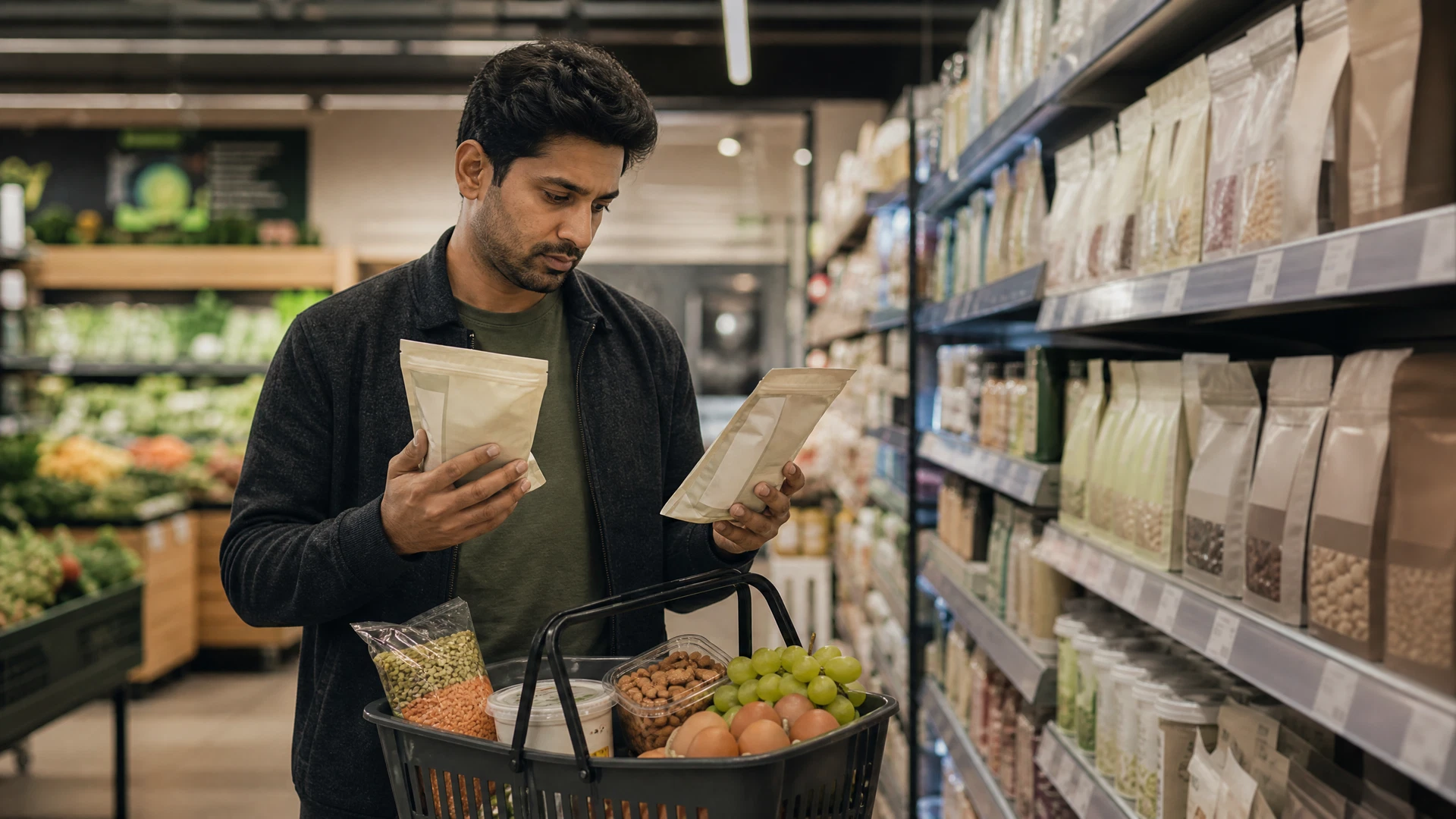
The funding story is significant because it shows how strongly high protein and low sugar now function as consumer promises. A promise on the front of a package, however, is only the beginning of the nutrition question.
The business signal
Medici Brands, the parent company of David Protein, raised a reported $250 million Series B at a reported valuation of $2.25 billion. Coverage described plans to expand beyond protein bars and grow additional packaged-food brands.[1] [2] [3]
Fitt Insider also reported approximately 35,000 retail locations and expected annual revenue above $300 million. Those operating figures should remain attributed to the company or reporting source rather than treated as independently audited facts.[1]
Investment tells us that buyers and investors see commercial opportunity. It does not tell us that a product is necessary, appropriate for everyone, or healthier than a balanced meal.
Why protein became the headline
Protein is easy to quantify, easy to place on packaging, and closely associated with strength, recovery, and satiety in consumer culture. That makes it a powerful organizing claim for bars, shakes, snacks, desserts, and even products that previously competed mainly on taste.
The useful reader question is not whether high protein is good in isolation. It is what job this food is meant to do in the day. A portable snack after training, a convenient option while travelling, and a replacement for a complete meal are different jobs.
A five-part label check
| Check | Ask | Why it matters |
|---|---|---|
| Protein | How many grams are in the serving I will actually eat? | A front-label number may depend on a serving size that does not match your use. |
| Whole context | What are the calories, fibre, fats, carbohydrates, and sodium? | One highlighted nutrient does not describe the complete product. |
| Ingredients | Which ingredients provide the protein, texture, and sweetness? | This helps compare similar products without reducing the choice to one claim. |
| Purpose | Is this a snack, supplement, dessert, or meal component? | The product should be judged against the role it is meant to fill. |
| Value | Would a familiar food meet the same need at a better price? | Convenience can be valuable, but it is not free. |
Low sugar and ultra-processed need context
Fitt Insider noted criticism of the products’ ultra-processed positioning and use of sweeteners.[1] Those labels can guide further questions, but they should not replace reading the actual ingredient list, nutrition panel, serving size, and pattern of use.
A packaged protein snack can be convenient. It can also be expensive, easy to overvalue because of one macro claim, or less satisfying than a meal built from familiar foods. Compare products on the whole label and the role they play, not on investor enthusiasm.
The Fitform takeaway
The $250 million raise is a story about the scale of the protein economy. For readers, the better story is how to keep marketing from making the choice. Start with the job the food needs to do, compare the full label, and remember that high protein is a characteristic—not a complete verdict.
Continue with the Nutrition archive or browse all Fiteforms articles.
Sources and further reading
1. Fitt Insider, David Protein Parent Raises $250M — Industry analysis published 2 September 2026.
2. Bloomberg, David Protein Maker Valued at $2.25 Billion in New Funding Deal — Business reporting published 2 September 2026.
3. Athletech News, David Protein Parent Lands $250M — Fitness-industry reporting published 2 September 2026.