
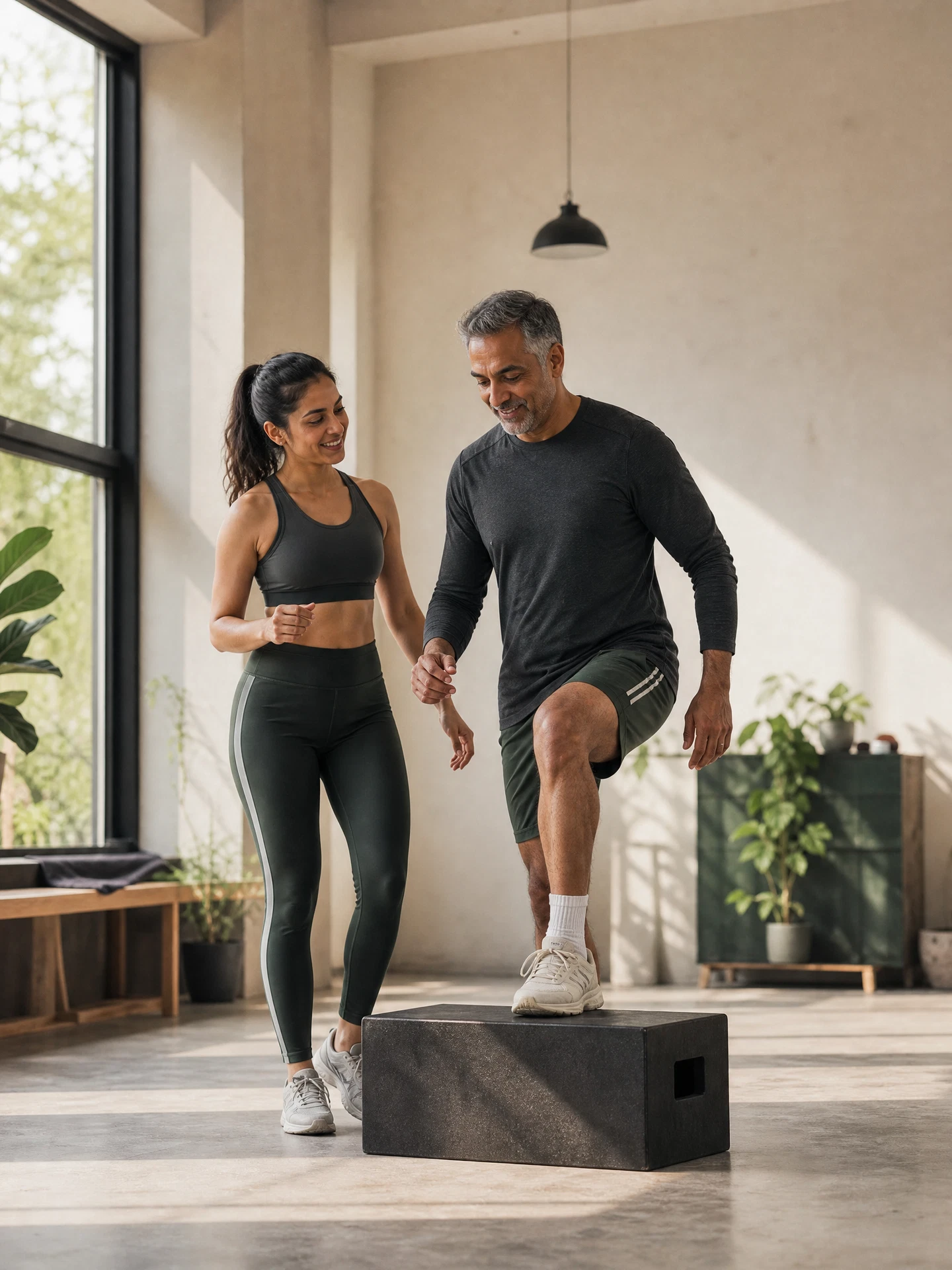
Fitness is not a test you pass before you belong. Start with the movement you can repeat, then build duration, frequency, and challenge only as your body and schedule adapt.
Know the destination, start below it
WHO and CDC guidance describes a long-term adult target of at least 150 minutes of moderate-intensity activity per week, or 75 minutes of vigorous activity, plus muscle-strengthening activity on at least two days.[1] [2] These are weekly health targets, not a requirement for your first week. Any activity is better than none.[1]
Your first two weeks
| Day | Session | Starting option |
|---|---|---|
| Monday | Easy aerobic activity | 10–20 minute walk, cycle, or accessible alternative |
| Wednesday | Full-body strength | Chair squat, wall push, supported row, hip hinge |
| Friday | Easy aerobic activity | Repeat Monday or choose another enjoyable activity |
| Saturday or Sunday | Optional mobility or strength | Short technique practice; stop well before exhaustion |
Progress the smallest useful variable
Add a few minutes, one set, a small amount of resistance, or one extra session—not all four at once. Moderate intensity generally means you can talk but not sing. Strength repetitions should stay controlled. If the routine cannot survive a busy week, simplify it rather than abandoning it.
Make access part of the plan
Walking, wheeling, cycling, household activity, dance, sport, and adapted exercise all count as movement.[1] Choose safe spaces and affordable equipment. People living with chronic conditions or disabilities can benefit from activity, but may need adaptations or professional input.
Safety is individual
Seek medical advice before major changes if you have concerning symptoms, a significant condition, recent surgery, pregnancy-related concerns, or uncertainty about what is safe. Stop and seek urgent help for chest pain, fainting, or severe breathing difficulty.
Continue with the Habits archive or browse all Fiteforms articles.
Sources and further reading
1. World Health Organization, Physical activity — Global activity definitions and recommendations.
2. CDC, Adult Activity: An Overview — Adult aerobic and muscle-strengthening targets.