
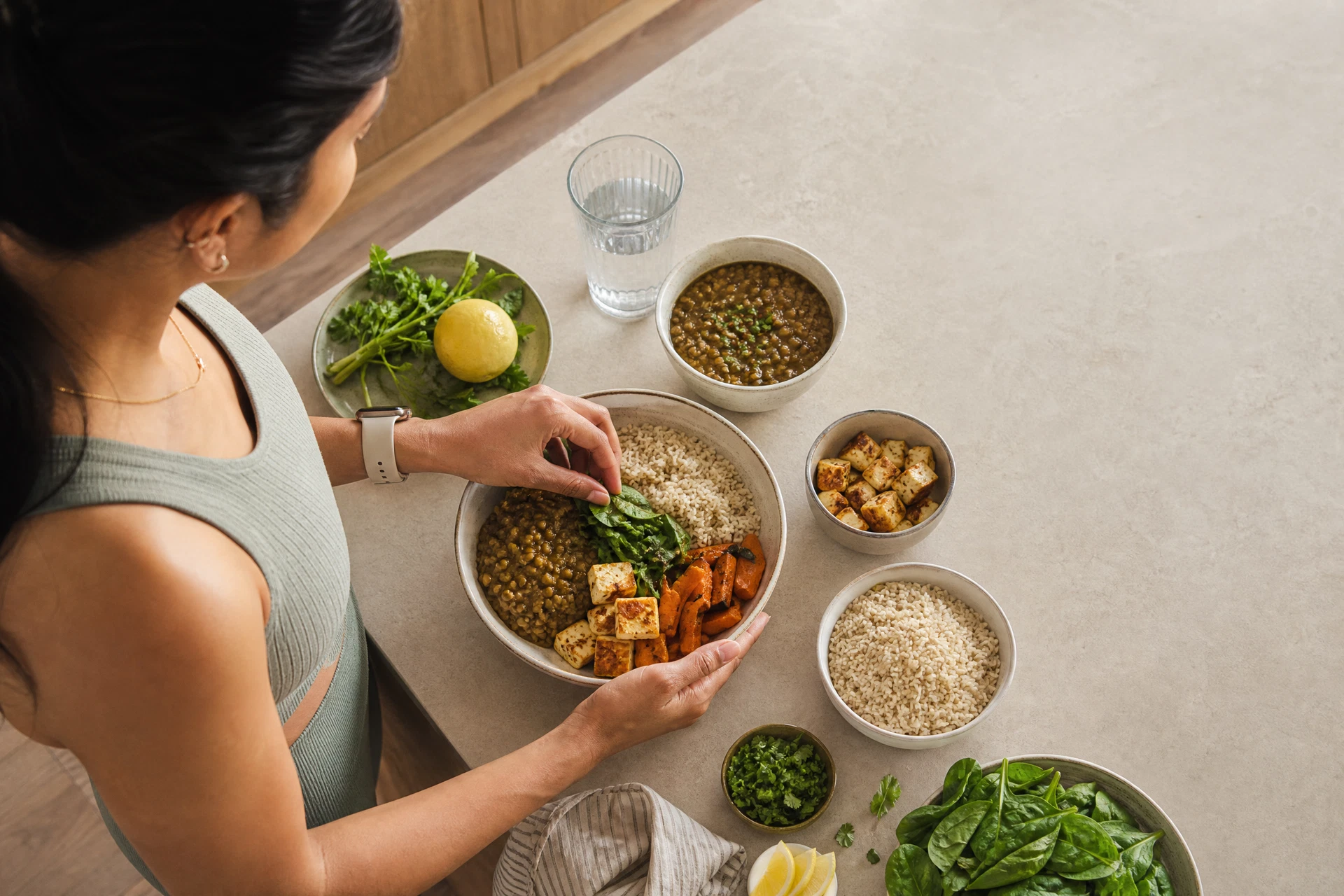
A plate guide is useful because it replaces perfect tracking with a visible question: does this meal contain colour, a useful protein source, a satisfying carbohydrate, and enough food for the person eating it?
Start with the pattern
WHO recommends dietary patterns built around a variety of minimally processed foods, including vegetables, fruit, pulses, whole grains, nuts, seeds, and appropriate protein foods, while limiting free sugars, excess sodium, and harmful fats.[1] No single meal has to express the whole pattern perfectly.
Use the plate as a prompt
The Harvard Healthy Eating Plate suggests making vegetables and fruits about half the plate, whole grains about one quarter, and healthy protein about one quarter.[2] These are visual proportions, not exact medical targets. Appetite, activity, age, culture, and health conditions change appropriate portions.
Translate it to familiar Indian meals
| Meal | Vegetables or fruit | Protein | Grain or starch |
|---|---|---|---|
| Dal-rice plate | Sabzi and salad | Dal and curd | Rice or millet |
| Roti meal | Two seasonal vegetables | Chana, rajma, paneer, egg, fish, or chicken | Whole-wheat roti |
| Breakfast | Fruit or vegetables in the dish | Curd, sprouts, egg, dal, or milk | Poha, oats, idli, dosa, or upma |
Adjust without moral labels
A meal can be nourishing without being idealized as clean, and a packaged or celebratory food does not make a diet bad. Use the pattern to add what is missing rather than to punish yourself for what is present. Medical diets for diabetes, kidney disease, allergies, pregnancy, or gastrointestinal conditions require individualized advice.
Continue with the Nutrition archive or browse all Fiteforms articles.
Sources and further reading
1. World Health Organization, Healthy diet — Global healthy-diet principles.
2. Harvard T.H. Chan School of Public Health, Healthy Eating Plate — Visual meal-composition framework.